
3 Things the NexusCon 100 See That Others Don't
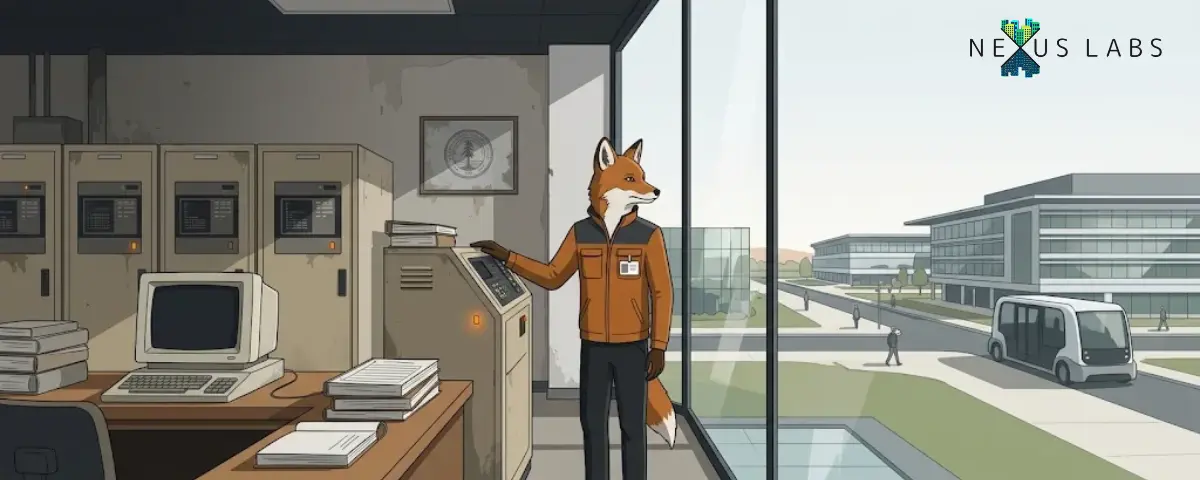
The year was 2015. I was standing in a facilities office at one of the most impressive university campuses in the country. Billions of dollars of infrastructure. New buildings rising every year. Inside the labs across the quad, researchers were doing work that would reshape entire fields.
And the technology stack running all 100+ buildings was... straight outta the 80s.
Meanwhile, I had a computer in my pocket that could navigate a foreign city, find nearby Thai restaurants with at least 4 stars, change the temperature on my condo's thermostat, translate a live conversation, connect to the watch on my wrist, measure my resting heart rate, and calculate my VO2 Max.
The university had done everything right, on paper. They'd standardized nearly every building on the same platform from a major global technology company. They'd invested in annual upgrades to the system, hired technicians who knew how to maintain it, employed teams of consultants (like me) who optimized performance, and even deployed software designed to automatically surface problems across thousands of devices.
What they got was a more sophisticated version of the same problem. The buildings ran the same way they always had.
Long after my project at the university ended, I couldn't shake the contrast between the pace of technological advancements outside vs. inside commercial buildings. And it hasn't gone away. If anything, it's gotten more drastic. We now have autonomous vehicles navigating real cities and AI agents executing complex tasks on our behalf. The millions of buildings around us remain decades behind.
That gap sparked a question that would shape the next decade of my career: why do our homes, cars, and phones keep getting smarter while our buildings stay so hard to modernize?
Over the next several years, I started asking everyone I could find (operators, engineers, technologists, real estate executives) how they were trying to close that gap.
Through those conversations, a community gathering took shape: NexusCon, which has since become the place where the people leading building modernization efforts come together to share what they're learning. This fall, one hundred building owner organizations gathered in Detroit for NexusCon 2026.
The range of organizations in this community tells you something important about the scope of this problem. Financial institutions like JPMorgan Chase. Healthcare systems like Kaiser Permanente. Retailers like Walmart and Amazon. Universities like Dartmouth and Stanford. Office landlords like Kilroy Realty. Apartment landlords like Equity Residential. Occupiers like LinkedIn and Lockheed Martin. Different sectors, different building types, different business models, all wrestling with the same fundamental challenge.
Organizations that own commercial buildings spend millions of dollars on building technology every year. And yet, most of those portfolios operate the same way they did twenty years ago. The operating model was never built for what buildings have become or what technology is now capable of.
When the operating model doesn't change, the benefits of connected technology never materialize. The costs (connecting every device, maintaining every integration, paying for every platform) start to look unjustifiable. So they get cut from the next budget, the tech stack falls behind, and the cost to catch up grows. Organizations end up with expensive, underperforming technology that becomes the evidence used to cut the next round of investment. It's a trap that tightens over time.
But I also watched something start to shift. A few organizations had done something different: they built what I now call a Connected Buildings program, a coordinated effort to align systems, data, and teams around shared outcomes. Those organizations were getting sustained results because they see things that most real estate leaders simply can't see yet.
The first thing they see is the governance gap. The way most real estate organizations are structured, split into functional departments, each with its own budget and technology stack, predates modern building systems entirely. It leaves a hole where no one fully owns building technology or views it as a system of systems. Once you see that hole, you can't unsee it.
The second thing they see is hidden waste. Fragmented building systems generate waste that quietly accumulates across a portfolio. Organizations running Connected Buildings programs start to surface all of it, and find it's far larger than anyone assumed.
The final thing they see is strategic potential. Most organizations treat buildings as a cost center, something to manage down. Those running Connected Buildings programs are starting to see something different: lower costs, of course, but also lower operational risk, lower carbon emissions, better occupant experience, and, in some cases, even higher revenue. Real estate as a strategic enterprise asset.
The organizations building these programs are already seeing outcomes that look fundamentally different from the portfolios still running the old playbook. The transition to Connected Buildings is underway. The open question is whether your organization will lead it or scramble to catch up.
Sign up for our biweekly newsletter to get more stories like this, plus updates on all upcoming Nexus Labs events:


This is a great piece!
I agree.