
How Low Tide Properties Designed a Smart Neighborhood by Starting With User Journeys Instead of Technology
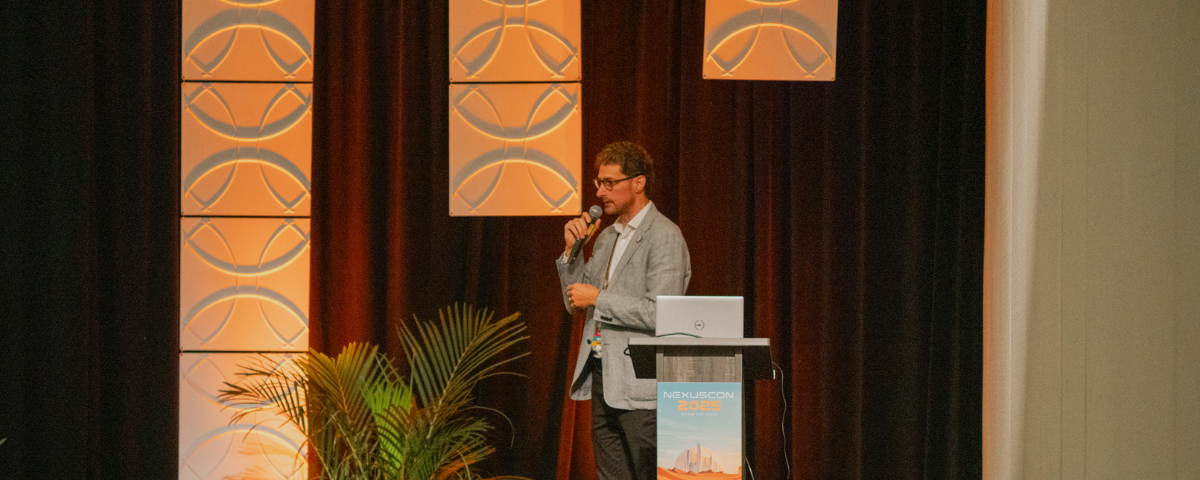
In this NexusCon 2025, Christian Nielsen, Head of Property Technology and Innovation at Low Tide Properties, walks through how his team rethought the foundation of their smart neighborhood program. Instead of beginning with technology—an approach that had repeatedly led to misaligned investments—Christian rebuilt the process around user journeys for residents, operators, and property managers.
He shares how Low Tide is developing one of Canada’s first “smart neighborhoods,” spanning legacy buildings, new mixed-use developments, and complex stakeholder groups. The talk highlights how Christian, coming from a digital product background rather than real estate, turned the traditional development process upside down to align design, construction, and operations around real human needs.
Behind the paywall, Christian reveals the specific tools and mapping frameworks his team used, what they learned from interviewing tenants and operators, and why the biggest barriers weren’t technical—they were cultural and organizational. He breaks down the early missteps, the friction with architects and contractors, and the surprising insights uncovered only through direct observation of real users.
You’ll also hear how Low Tide phased its technology roadmap to avoid stale systems, how they’re aligning executives and the board around program priorities, and what they would do differently next time. If you’re running or advising a Connected Buildings program, this recording offers a practical, detailed blueprint for defining user needs and translating them into scalable smart building strategies.
Watch the full recording inside Nexus Pro →
In this NexusCon 2025, Christian Nielsen, Head of Property Technology and Innovation at Low Tide Properties, walks through how his team rethought the foundation of their smart neighborhood program. Instead of beginning with technology—an approach that had repeatedly led to misaligned investments—Christian rebuilt the process around user journeys for residents, operators, and property managers.
He shares how Low Tide is developing one of Canada’s first “smart neighborhoods,” spanning legacy buildings, new mixed-use developments, and complex stakeholder groups. The talk highlights how Christian, coming from a digital product background rather than real estate, turned the traditional development process upside down to align design, construction, and operations around real human needs.
Behind the paywall, Christian reveals the specific tools and mapping frameworks his team used, what they learned from interviewing tenants and operators, and why the biggest barriers weren’t technical—they were cultural and organizational. He breaks down the early missteps, the friction with architects and contractors, and the surprising insights uncovered only through direct observation of real users.
You’ll also hear how Low Tide phased its technology roadmap to avoid stale systems, how they’re aligning executives and the board around program priorities, and what they would do differently next time. If you’re running or advising a Connected Buildings program, this recording offers a practical, detailed blueprint for defining user needs and translating them into scalable smart building strategies.
Watch the full recording inside Nexus Pro →


This is a great piece!
I agree.