
.png)
NAU uses generative AI to ingest 6,000 building docs into a knowledge graph to combat skilled trade turnover
Northern Arizona University handed its building operations platform partner, Willow, a SharePoint folder containing roughly 6,000 construction drawings, as-builts, and O&M manuals, and asked them to make it usable.
Instead of attempting to manually review and connect the building docs, Willow used generative AI to ingest the documents and extract system relationships: how chillers are configured, which pumps feed which air handlers, and which terminal units serve which rooms, into a structured knowledge graph . That graph now underpins analytics, root-cause analysis, and commissioning comparisons against original design parameters.
The driver for the project wasn’t novelty; it was labor shortage and turnover.
NAU, like many large building owner, is experiencing significant turnover from their aged tradespeople who know their equipment best. The younger technicians who replace them lack the historical context, and wouldn't know where to begin to find building documents scattered throughout the internal database and basement filing cabinets.
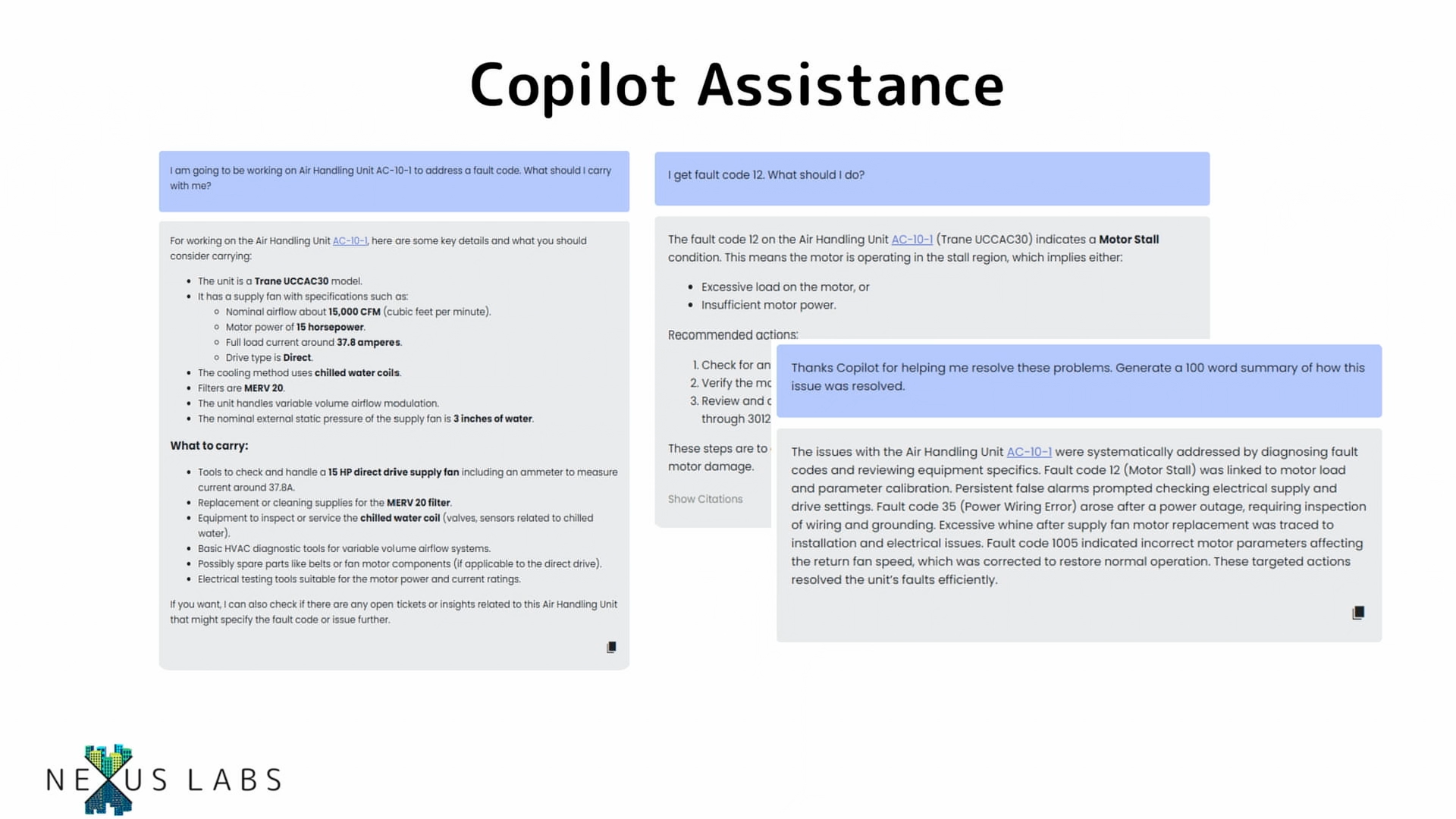
NAU now layers a Copilot interface on top of the ingested data—pulling from as-builts, operating manuals, asset metadata, and historical work orders—to help technicians troubleshoot faults with model details and resolution steps.
This acts as a real-world, practical use case of AI in facility management. One example NAU shared is the ability for technicinas to ask CoPilot which tools they should bring with them depending on the unit they are sevicing.
For a campus struggling to recruit skilled trades to high-cost Flagstaff, the value is practical: compress onboarding time, reduce dependence on tribal knowledge, and make new hires productive faster.
Register for the next Nexus Labs event
Sign up for the newsletter to get 5 stories like this per week:
Northern Arizona University handed its building operations platform partner, Willow, a SharePoint folder containing roughly 6,000 construction drawings, as-builts, and O&M manuals, and asked them to make it usable.
Instead of attempting to manually review and connect the building docs, Willow used generative AI to ingest the documents and extract system relationships: how chillers are configured, which pumps feed which air handlers, and which terminal units serve which rooms, into a structured knowledge graph . That graph now underpins analytics, root-cause analysis, and commissioning comparisons against original design parameters.
The driver for the project wasn’t novelty; it was labor shortage and turnover.
NAU, like many large building owner, is experiencing significant turnover from their aged tradespeople who know their equipment best. The younger technicians who replace them lack the historical context, and wouldn't know where to begin to find building documents scattered throughout the internal database and basement filing cabinets.
NAU now layers a Copilot interface on top of the ingested data—pulling from as-builts, operating manuals, asset metadata, and historical work orders—to help technicians troubleshoot faults with model details and resolution steps.
This acts as a real-world, practical use case of AI in facility management. One example NAU shared is the ability for technicinas to ask CoPilot which tools they should bring with them depending on the unit they are sevicing.
For a campus struggling to recruit skilled trades to high-cost Flagstaff, the value is practical: compress onboarding time, reduce dependence on tribal knowledge, and make new hires productive faster.
Register for the next Nexus Labs event
Sign up for the newsletter to get 5 stories like this per week:


This is a great piece!
I agree.