
.png)
Lincoln Property Company Combats 1:300k Sq Ft Staffing Ratios via Simplified FDD Dashboards
Lincoln Property Company (LPC) has revamped its operational strategy to address a growing labor gap: the shift from one engineer per 125,000 square feet of commercial buildings to over 300,000 square feet per person. With technology advancing and square footage per person increasing, traditional Building Automation System (BAS) deep-dives from expert technicians have become unscalable for time-strapped teams.
"How am I going to have a property manager or chief engineer look at computer programming and do something with it?" asked Chris Lelle, of Lincoln Property Company. "I can't do it. I can't scale it, I can't run it... unless it's super streamlined and efficient".
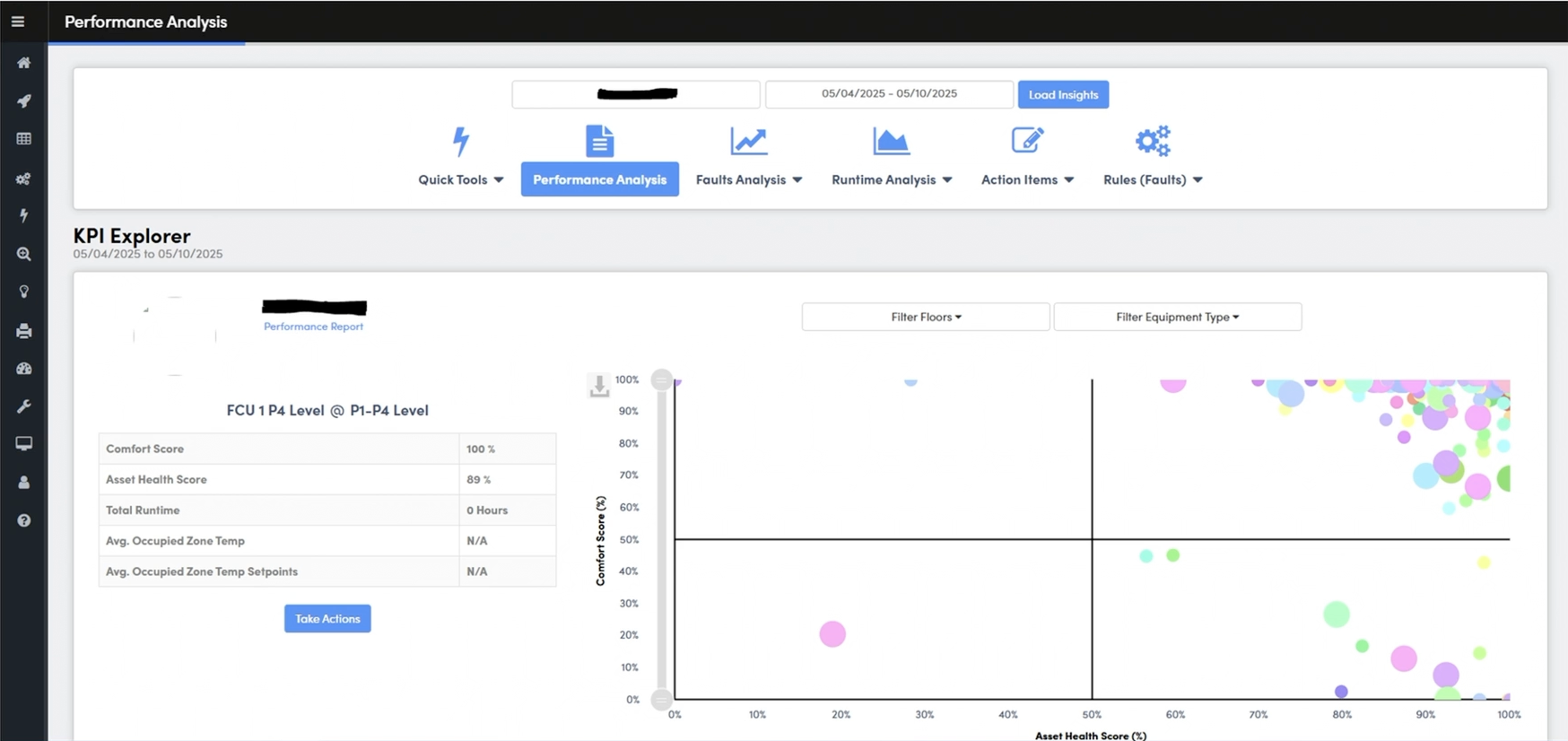
To solve this, LPC implemented a simplified fault detection and diagnostics (FDD) interface through a partnership with Point Guard. The system utilizes a UI that is simple to interpret and act upon, like a "dot-based" visualization dashboard of detected. The Y-axis measures a Comfort Score—whether the unit stayed within 3 degrees of the set point, while the X-axis tracks asset health, indicating whether the equipment followed its programmed rules. The size of each dot represents the duration of the issue. Instead of wading through data, engineers ignore the top-right quadrant where units are performing well and focus exclusively on the three to five furthest outliers.
The results of implementing FDD into the day-to-day work of engineers are concrete. At one 135,000-square-foot property, HVAC complaints dropped from an average of 130 per year to fewer than 20 after implementing FDD and updated sequences. Lelle notes that while FDD validates the work, the real gains come from removing the burden of programming from the onsite teams. "If you want a project to fail, don't train the chief engineer," Lelle said. "If you don't build something that they can use a hundred percent. It's just going to die".
Register for the next Nexus Labs event
Sign up for the newsletter to get 5 stories like this per week:
Lincoln Property Company (LPC) has revamped its operational strategy to address a growing labor gap: the shift from one engineer per 125,000 square feet of commercial buildings to over 300,000 square feet per person. With technology advancing and square footage per person increasing, traditional Building Automation System (BAS) deep-dives from expert technicians have become unscalable for time-strapped teams.
"How am I going to have a property manager or chief engineer look at computer programming and do something with it?" asked Chris Lelle, of Lincoln Property Company. "I can't do it. I can't scale it, I can't run it... unless it's super streamlined and efficient".
To solve this, LPC implemented a simplified fault detection and diagnostics (FDD) interface through a partnership with Point Guard. The system utilizes a UI that is simple to interpret and act upon, like a "dot-based" visualization dashboard of detected. The Y-axis measures a Comfort Score—whether the unit stayed within 3 degrees of the set point, while the X-axis tracks asset health, indicating whether the equipment followed its programmed rules. The size of each dot represents the duration of the issue. Instead of wading through data, engineers ignore the top-right quadrant where units are performing well and focus exclusively on the three to five furthest outliers.
The results of implementing FDD into the day-to-day work of engineers are concrete. At one 135,000-square-foot property, HVAC complaints dropped from an average of 130 per year to fewer than 20 after implementing FDD and updated sequences. Lelle notes that while FDD validates the work, the real gains come from removing the burden of programming from the onsite teams. "If you want a project to fail, don't train the chief engineer," Lelle said. "If you don't build something that they can use a hundred percent. It's just going to die".
Register for the next Nexus Labs event
Sign up for the newsletter to get 5 stories like this per week:


This is a great piece!
I agree.